


Last News
Recommendations for the Development of an Integrated System for Protection of Child Victims of Abuse and/or Crime in Bulgaria
Prof Nelly Petrova-Dimitrova,
SAPI, Sofia University "St. Kliment Ohridski"
Dr. Nadya Stoykova, SAPI
As an organisation, having as our mission the support of implementing modern social work in Bulgaria, and having been contributing for over fifteen years to social work development and rolling out, and to the introduction in the Bulgarian judicial system of the principles of social work, human rights, the rights of the child, we consider that it is necessary to introduce an integrated professional approach of protection and safeguarding of the rights of victims of crime and especially of the those most vulnerable – children, women, people with disabilities, victims of domestic violence, victims of gender-based violence, etc., which would enable the integration of the efforts of the universal, social and rehabilitation services.
We contribute and we are willing to continue contributing to the actual establishment of high European-level practice when handling cases of child victims of crime, which is based on their best interests, on the right of the child to be heard in a friendly environment, the right to security and protection as well as the right to be informed of their rights in an suitable manner.
Thanks to the support of EU, OAK Foundation, UNICEF-Bulgaria programmes, we developed a practice in the past ten years, which not only meets the requirеments of the Directive, but also introduces a model of integrated individual assessment and an integrated approach based on this assessment, bringing together services and activities ensuring child-friendly justice, protection and recovery from traumas.
We support the adoption of legislative amendments to the Penal Procedure Code (PPC) to ensure mandatory individual assessment of all child victims of crime.
We support the changes requiring joint work of Social Assistance Directorate (SAD)/Child Protection Department (CPD), police, medical services, providers of specialised social services for child victims of abuse and crimes.
We would like to express our concern about the delay in the transposition of Directive 2012/29 for which financial sanctions have already been imposed on Bulgaria; we are also concerned about the lack of support on the part of government institutions for the Directive’s transposition. We consider that the delay is due to insufficient intersectoral and interinstitutional collaboration in the best interests of the victims. We are strongly concerned that the insufficient collaboration is very often manifested as a lack of commitment and even resistance to the implementation of a directive concerning rights to justice, support, treatment of victims.
We support the adoption of legislative amendments to PPC to ensure mandatory individual assessment of all child victims of crime. We support the changes requiring joint work of Social Assistance Directorate (SAD)/Child Protection Department (CPD), police, medical services, providers of specialised social services for child victims of abuse and crimes.
It is our opinion that the amendments to the PPC should most of all ensure that the child, their parents or guardians are informed of the child’s rights, including their right to individual assessment, which reflects the child’s readiness to participate in judicial proceedings, the risk of being exposed to repeat or secondary victimisation. We consider that the assessment should determine the type and sequence of child protection activities and measures, of child-friendly procedures during the interview and procedures for recovery from the psychological trauma experienced. This can indeed enable the implementation of practices which are based on the best interests of the child.
The experience of working to amend the existing legal framework reveals the necessity of expert support for the changes, which is most of the time unavailable. There is clearly a discrepancy between the current penal theory, inherited from the soviet period of law development in Bulgaria, and the need to introduce amendments in order to ensure the best interests of the child as a leading principle, recognised by the country through the Constitution. Most of the efforts to introduce change to that effect face resistance and reluctance to change the penal doctrine. It is our opinion that this is the main reason for the delay in the transposition of Doctrine 2012/29 EU.
We are seriously concerned by the insufficient initiative for change in the key ministries and especially by the some manifestations of resistance to such change displayed in various ways. Resistance is justified with the lack of resources in the field of social work and social services, with the fact that change is perceived as a threat to the functioning of the judicial system and to a great extent as a wishful thing, etc. It is greatly disturbing that the Ministry of Health show no interest at all in this matter, and that a commitment to provide psychotherapeutic support continues to be lacking.
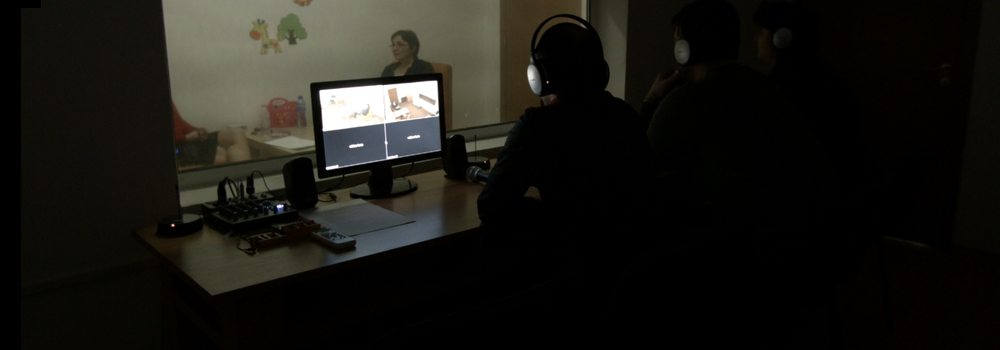
Our recommendations to the responsible government institutions are based on analysis of the activities and practices of introducing child-friendly justice, on the annual analysis of the work done in the so called “Blue Rooms”, and most of all on the analysis of the model piloted in Vidin under the Listen to the Child– Justice Befriends the Child project.
The model is based on an integrated approach to child protection, which according to us shall comprise protection, child-friendly justice and social and psychotherapeutic support for overcoming the consequences, with all those being based on individual assessment of the risk to the child, of their needs and the resources of the child, the family and the community.
The recommendations have been consulted with child victims who have been involved in judicial proceedings as well as with their families. The children express their anxiety about the way they have been interviewed, the fear of the things that are happening and of the unknown; usually, there is no one to explain to them what is going on, what they can expect, who the people asking them questions are, why they ask them questions, what all this will result in, etc.
Recommendation No. 1. Undertaking of meaningful political and professional commitment on the part of the government to introduce child- friendly justice practices; persistence on the part of the key ministries and government structures - Ministry of Justice (MJ), Ministry of Interior (MoI), Ministry of Labour and Social Policy (MLSP), Ministry of Health (MH), State Agency for Child Protection (SACP) in reforming their own practices.
Recommendation No. 2. Undertaking a clear professional commitment and a leading role on the part of the Supreme Prosecutor‘s Office of Cassation (SPC), the Supreme Judicial Council (SJC) and magistrates’ professional associations to seeking adequate legal solutions with relation to the required reforms.
Recommendation No. 3. Actual implementation of multidisciplinary and multiinstitutional approach by encouraging the development of working agreements and protocols for taking actions on national level in accordance with Art. 11 of the Agreement on Co-operation and Co- ordination of the Work of the Territorial Structures of the Protection Authorities in cases of child victims of abuse or at risk of abuse and in crisis intervention (Coordination Mechanism).
Recommendation No. 4. It is necessary to improve the practices of informing the child and their family of the child’s rights.
Recommendation No. 5. It is our opinion that it is necessary to make serious efforts to introduce/use the individual assessment of child victim of crime and/or abuse in the criminal proceedings of each member state.
Recommendation No. 6. Participation of children in every decision that affects them. During the initial contact with the child, it is necessary to advise them of the situation, of the possible actions, of their rights; to seek and respect their opinion.
Recommendation No. 7. The preparation and the interviewing of a child victim or witness of a crime is to be conducted in accordance with an accredited knowledge-based methodology, adopted by the competent authorities on national and local level.
Recommendation No. 8. Necessity of introducing modern approaches to the specialisation of staff working with children – need of new standards.
The full text of the recommendations can be read in the file below.
Актуално от нас
Кампании и обучения


